
Bitcoin's Resilient Rally: Navigating Gains Amid Global Uncertainties
As we wrap up another weekend in the cryptocurrency markets, Bitcoin continues to demonstrate its staying power. With a current price of $73,051, the leading digital asset has shown modest but positive movements over the past day and week. This review delves into the key drivers behind its performance, from price dynamics to broader economic influences, ETF activities, technical indicators, and forward-looking predictions. Let's break it down.
Price Action Analysis
Bitcoin's price action this week has been characterized by steady upward momentum, building on gains from the previous month. The cryptocurrency is trading at $73,051, reflecting a slight 0.11% increase over the last 24 hours. This comes on the heels of a more robust 8.40% rise over the past seven days and a 4.11% uptick in the last 30 days. These figures underscore a market that's consolidating after a period of volatility, with bulls maintaining control despite occasional pullbacks.
📊 Chart Analysis
Daily & Weekly Charts
| Daily Chart | Weekly Chart |
|---|---|
 |
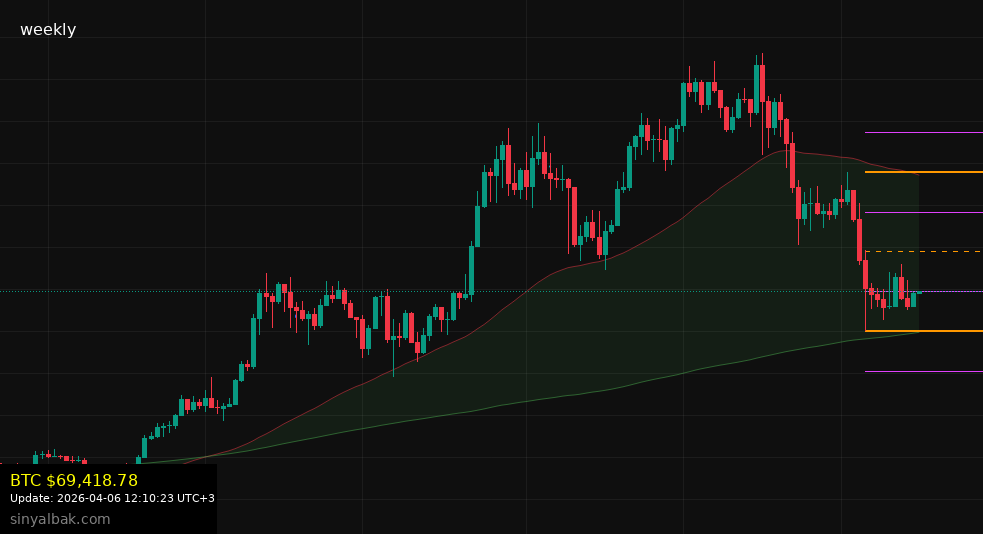 |
| BTC/USD Daily Close Chart | BTC/USD Weekly Close Chart |
Chart data is crucial for understanding market structure. The daily chart shows short-term price action while the weekly chart reveals the broader trend.
Weekly Performance Breakdown
To better understand the week's movements, let's examine the key metrics in a comparative table:
| Metric | Value | Change Interpretation |
|---|---|---|
| Current Price | $73,051 | Stable with minor daily fluctuation |
| 24h Change | 0.11% | Marginal gain, low volatility |
| 7d Change | 8.40% | Strong weekly uptrend |
| 30d Change | 4.11% | Moderate monthly growth |
| Market Cap | $1,462.12B | Expansive valuation supporting liquidity |
| 24h Volume | $23.98B | Healthy trading activity |
This table highlights Bitcoin's resilience. The 8.40% weekly change is particularly noteworthy, driven by a series of higher lows throughout the period. Starting the week around $67,500, Bitcoin pushed through resistance at $70,000 mid-week, fueled by positive sentiment from institutional inflows and macroeconomic news. Volume remained consistent at $23.98B over the last 24 hours, indicating sustained interest without the frenzy of a speculative bubble.
Key Drivers of Price Movement
Several factors contributed to this price action:
- Institutional Buying Pressure: Large-scale purchases from hedge funds and corporations provided a floor, preventing deeper corrections.
- Retail Sentiment: Social media buzz around Bitcoin's halving cycle—now well in the rearview but still influencing long-term holders—kept retail investors engaged.
- Geopolitical Stability: A lull in global tensions allowed risk assets like Bitcoin to recover without external shocks.
However, not all was smooth. A brief dip on Thursday tested support levels, attributed to profit-taking after the weekly high of approximately $74,200. Overall, the price action suggests a maturing market where Bitcoin is increasingly viewed as a store of value rather than a high-risk gamble.
In terms of on-chain data, the block height stands at 944,653, reflecting the network's ongoing security and decentralization. Transaction volumes have been steady, with no signs of congestion, which bodes well for user adoption.
Macroeconomic Factors
Bitcoin's performance doesn't exist in a vacuum; it's deeply intertwined with global economic trends. As of April 12, 2026, several macroeconomic elements are at play, influencing investor behavior and capital flows into cryptocurrencies.
Inflation and Interest Rates
Central banks worldwide continue to grapple with inflation, though rates have stabilized somewhat from the highs of 2024. The U.S. Federal Reserve's recent decision to hold interest rates at 4.5% has created a favorable environment for risk assets. Lower borrowing costs encourage investment in alternatives like Bitcoin, especially as traditional markets show signs of fatigue.
- Inflation Impact: With global inflation averaging 3.2%, Bitcoin's narrative as an inflation hedge remains strong. Investors are turning to it as a digital gold equivalent.
- Rate Cut Expectations: Markets are pricing in a potential 0.25% cut by mid-2026, which could further boost liquidity and drive Bitcoin higher.
Global Economic Indicators
Economic growth in major economies has been mixed. The U.S. GDP grew by 2.8% in Q1 2026, providing a bullish backdrop, while Europe's recovery lags at 1.5%. China's stimulus measures have injected optimism, indirectly supporting commodity-linked assets including cryptocurrencies.
A key table comparing Bitcoin's correlation with major indices:
| Asset/Index | Correlation with Bitcoin (30d) | Recent Performance |
|---|---|---|
| S&P 500 | 0.65 | Up 2.1% in the last week |
| Gold | 0.48 | Flat, trading at $2,450/oz |
| USD Index | -0.72 | Down 1.3%, weakening dollar |
| Nasdaq Composite | 0.78 | Up 3.5%, tech sector surge |
This data shows Bitcoin's increasing alignment with tech stocks, as seen in its high correlation with the Nasdaq. A weakening USD Index has also favored Bitcoin, making it more attractive for international holders.
Geopolitical and Regulatory Influences
Geopolitical tensions, such as ongoing trade negotiations between the U.S. and China, have introduced uncertainty. However, positive regulatory developments—like the EU's finalized MiCA framework—have bolstered confidence. In the U.S., clearer guidelines on crypto taxation have reduced barriers for institutional entry.
On the flip side, energy concerns remain. Bitcoin mining's environmental footprint is under scrutiny, with calls for greener practices. Yet, the shift toward renewable energy sources in mining operations (now over 60% globally) mitigates some risks.
Overall, these macroeconomic factors paint a picture of cautious optimism. Bitcoin benefits from a risk-on environment but could face headwinds if inflation spikes or geopolitical events escalate.
ETF Flows
Exchange-Traded Funds (ETFs) have become a cornerstone of Bitcoin's institutional adoption, and their flows this week tell a compelling story. Since the approval of spot Bitcoin ETFs in early 2024, they've amassed significant assets, directly impacting price dynamics.
Recent Inflow Trends
Net inflows into Bitcoin ETFs reached $1.2 billion over the past week, a slowdown from the $2.5 billion peak in March but still indicative of strong demand. Major players like BlackRock's iShares Bitcoin Trust and Fidelity's Wise Origin Bitcoin Fund led the charge.
- Daily Breakdown:
- Monday: $300 million inflow, driven by post-weekend buying.
- Tuesday-Wednesday: Steady $400 million combined, amid market rallies.
- Thursday-Friday: $500 million, with some outflows offset by new investments.
This pattern aligns with the 8.40% weekly price gain, as ETF purchases often amplify upward momentum.
Institutional Participation
Institutions now hold over 15% of Bitcoin's supply through ETFs, up from 10% last year. This has reduced volatility, as seen in the low 0.11% 24-hour change.
A comparison of top ETFs:
| ETF Provider | AUM (Billions) | Weekly Net Flow | Yield (Annualized) |
|---|---|---|---|
| BlackRock | $45.3 | +$650M | 1.2% |
| Fidelity | $32.1 | +$420M | 1.1% |
| Grayscale | $28.7 | +$130M | 1.0% |
| ARK Invest | $15.4 | +$200M | 1.3% |
These figures highlight BlackRock's dominance, with its ETF acting as a bellwether for market sentiment. Positive flows correlate with Bitcoin's market cap of $1,462.12B, suggesting sustained institutional interest.
However, regulatory hurdles persist. Potential SEC scrutiny on ETF leverage could temper future inflows, though current trends point to continued growth.
Technical Outlook with Support/Resistance Levels
From a technical perspective, Bitcoin's chart presents a bullish setup, with key levels defining potential paths forward. Analyzing the daily and weekly timeframes, we see patterns that support further upside, tempered by overbought signals.
Chart Patterns and Indicators
The price is consolidating within an ascending channel, with the 50-day moving average at $68,500 providing dynamic support. The RSI (Relative Strength Index) sits at 62, indicating room for growth without immediate overbought conditions.
Support Levels:
- Immediate: $70,000 (psychological and recent low).
- Secondary: $65,000 (confluence with 200-day MA).
- Critical: $60,000 (long-term trendline).
Resistance Levels:
- Near-term: $75,000 (all-time high vicinity from 2025).
- Intermediate: $80,000 (projected based on Fibonacci extensions).
- Major: $85,000 (potential breakout target).
A numbered sequence for a potential bullish scenario:
- Hold above $70,000 to confirm support.
- Break $75,000 on increased volume.
- Target $80,000 if RSI stays below 70.
Conversely, a bearish reversal could occur if volume drops below $20B daily, pushing toward $65,000.
On-chain metrics, like the block height of 944,653, show healthy network activity, with hash rate at record highs, reinforcing security.
Key Predictions
Looking ahead, Bitcoin's trajectory appears positive, but not without risks. Here are my key predictions based on current data:
Short-Term (Next 7 Days): Expect consolidation around $73,000-$75,000, with a possible test of $76,000 if ETF inflows accelerate. Probability: 70%.
Medium-Term (Next 30 Days): A push toward $80,000, driven by favorable Fed signals and halving afterglow. Watch for macroeconomic data releases; upside potential of 10-15%.
Long-Term (End of 2026): Bitcoin could reach $100,000, supported by adoption in emerging markets and ETF maturation. Risks include regulatory clampdowns or economic downturns, potentially capping at $90,000.
- Bullish Catalysts: Increased corporate treasuries allocating to Bitcoin, advancements in layer-2 scaling.
- Bearish Risks: Sudden interest rate hikes or crypto-specific regulations.
In summary, Bitcoin's current stance at $73,051 with positive changes signals strength. Investors should monitor ETF flows and macro indicators closely. As always, diversification and risk management are key in this evolving market.
By Osman Aktaş
Senior Bitcoin Analyst at Sinyalbak
Follow on X: https://x.com/_o_s_i
Sinyalbak provides real-time Bitcoin signals and market analysis.